
Skip to content
cs@sspgroup.com8401 5 Side Rd, Milton, ON L9T 2Y7

RGN / Heavy Haul

Specialized heavy haul capacity for freight beyond standard deck limits.

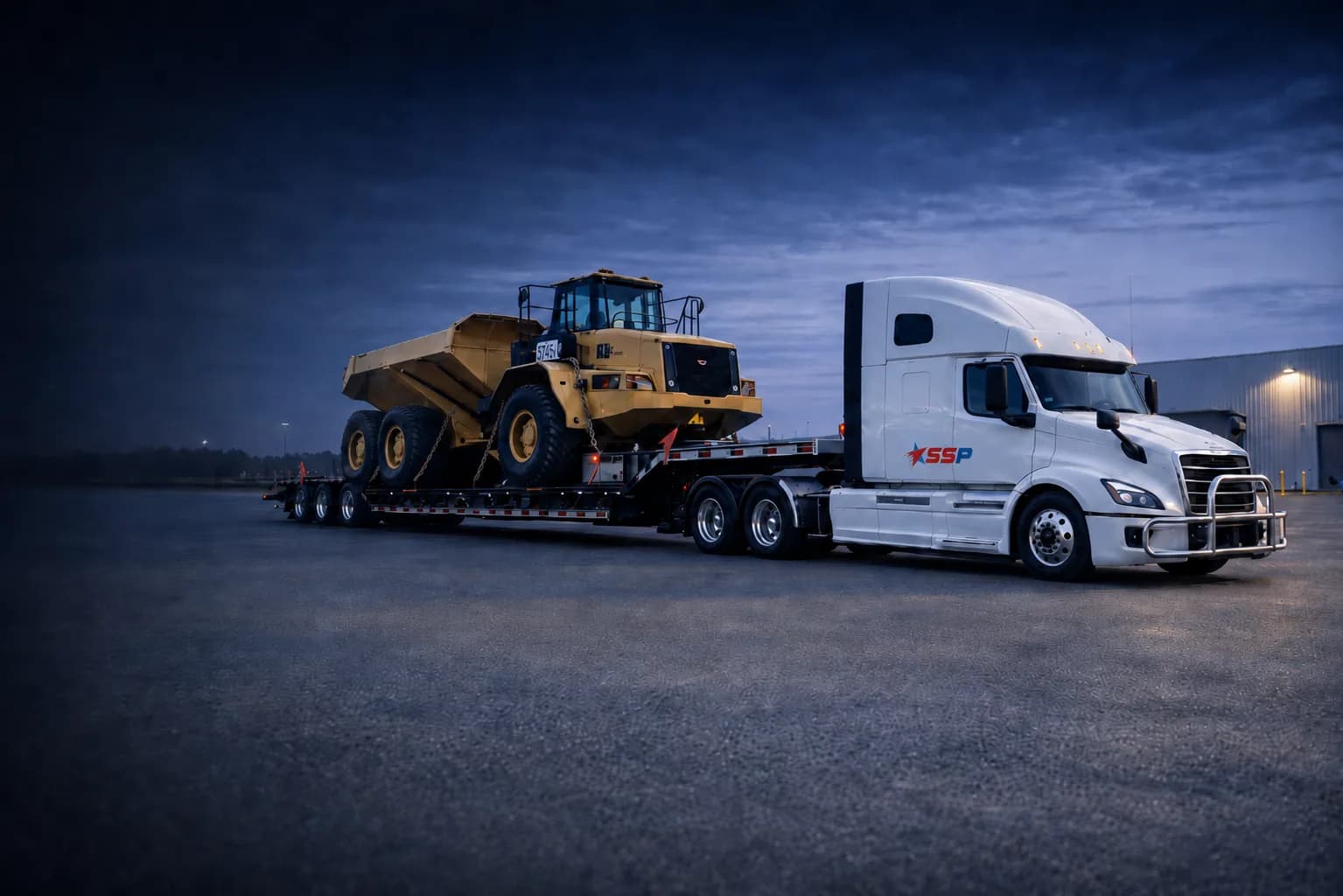
We moves RGN and heavy haul freight across Canada, the United States, and Mexico for shippers that need permit-led planning, lower loading geometry, specialized axle configurations, and controlled site execution. This is the right equipment path for construction equipment, transformers, mining units, oversized machinery, and project cargo that cannot move cleanly on standard flatbed, step deck, or protected open-deck equipment.

Equipment Overview

Heavy haul fit starts with loading geometry, axle plan, and route reality.

Before a load is booked, overall dimensions, piece weight, loading method, center of gravity, axle requirements, and route constraints should be checked against the actual freight. That is what determines whether RGN or another heavy-haul path is operationally viable before permits and dispatch are set in motion.

Length
Configuration depends on trailer setup, deck sections, and project requirements
Width
Legal width or permit width depending on cargo profile and route
Height
Low deck supports taller freight, but total loaded height still depends on route and permit conditions
Max Freight Weight
Axle- and configuration-dependent; heavy haul planning may exceed standard legal payload with permits
RGN heavy haul equipment diagram with low-deck dimensions and oversized freight guidance

For RGN / Heavy Haul

Why SSP

For RGN / Heavy Haul

01

Route, permit, and equipment logic are qualified before dispatch

We review dimensions, piece weight, loading geometry, axle requirements, and route exposure before heavy haul capacity is committed, so the move starts with a realistic operating plan instead of assumptions discovered too late.

02

Site execution is aligned before the equipment arrives

Pickup conditions, crane or drive-on loading method, escort requirements, unloading sequence, and delivery-site constraints are structured before dispatch so the move does not lose control at either end of the route.

03

Exceptions stay managed as part of the shipment

Permit changes, route restrictions, weather exposure, detention risk, and site-side delays remain managed responsibilities tied to the move from planning through closeout rather than issues left for after-the-fact escalation.

Freight Fit Guide

Freight fit should confirm heavy haul before permit work begins.

Use this guide to confirm that the shipment moves beyond standard legal or equipment limits and needs a specialized heavy-haul operating path. If the freight still fits flatbed, step deck, or another standard trailer path, we should route it early before complexity is added unnecessarily.

RGN / Heavy Haul Freight Fit Guide

RGN and heavy haul equipment are used when freight needs lower loading geometry, specialized axle configurations, or permit-led planning beyond standard trailer assumptions. Use this guide to confirm the load fits the equipment envelope and to identify a better service path when the shipment requires another operating model.

How It Works

A heavy haul move should be engineered before dispatch.

RGN and heavy haul execution improve when cargo geometry, route reality, permit requirements, and site handling are aligned before dispatch. This is the operating sequence we follow.

01

Confirm cargo profile and loading geometry

Dimensions, weight, center-of-gravity concerns, loading method, and piece characteristics are reviewed first so the right heavy-haul path is confirmed before pricing or capacity is assigned.

02

Align route, permit, and site requirements

Route limits, permit exposure, escort needs, axle strategy, loading equipment, site access, and unloading sequence are built into the operating plan before dispatch.

03

Dispatch against controlled milestones

Once the move is qualified, we dispatches against pickup, in-transit, and delivery milestones with communication tied to permit windows, route checkpoints, and site readiness.

04

Close delivery with documentation and exception discipline

Delivery confirmation, POD closeout, accessorial review, and any route or site-side follow-through stay connected to the shipment so the move finishes cleanly and stays accountable through completion.

RGN / Heavy Haul FAQs

The operating questions that matter before booking heavy haul.

These are the questions that usually determine whether RGN or heavy haul is the correct equipment path and what we need to structure the move cleanly.

RGN and heavy haul are best for oversized, overweight, or difficult-geometry freight that cannot move cleanly on standard flatbed, step deck, or protected open-deck equipment. Common examples include construction equipment, transformers, mining units, oversized machinery, and project cargo.

Confirm the fit

Confirm heavy haul fit before permit work and dispatch begin.

Share the lane, commodity, dimensions, weight, loading method, and timing requirements. We will confirm whether RGN or heavy haul is the right equipment path, surface route and permit risks early, and structure the move for controlled execution.

Confirm the fit