
Load Engineering and Securement Discipline
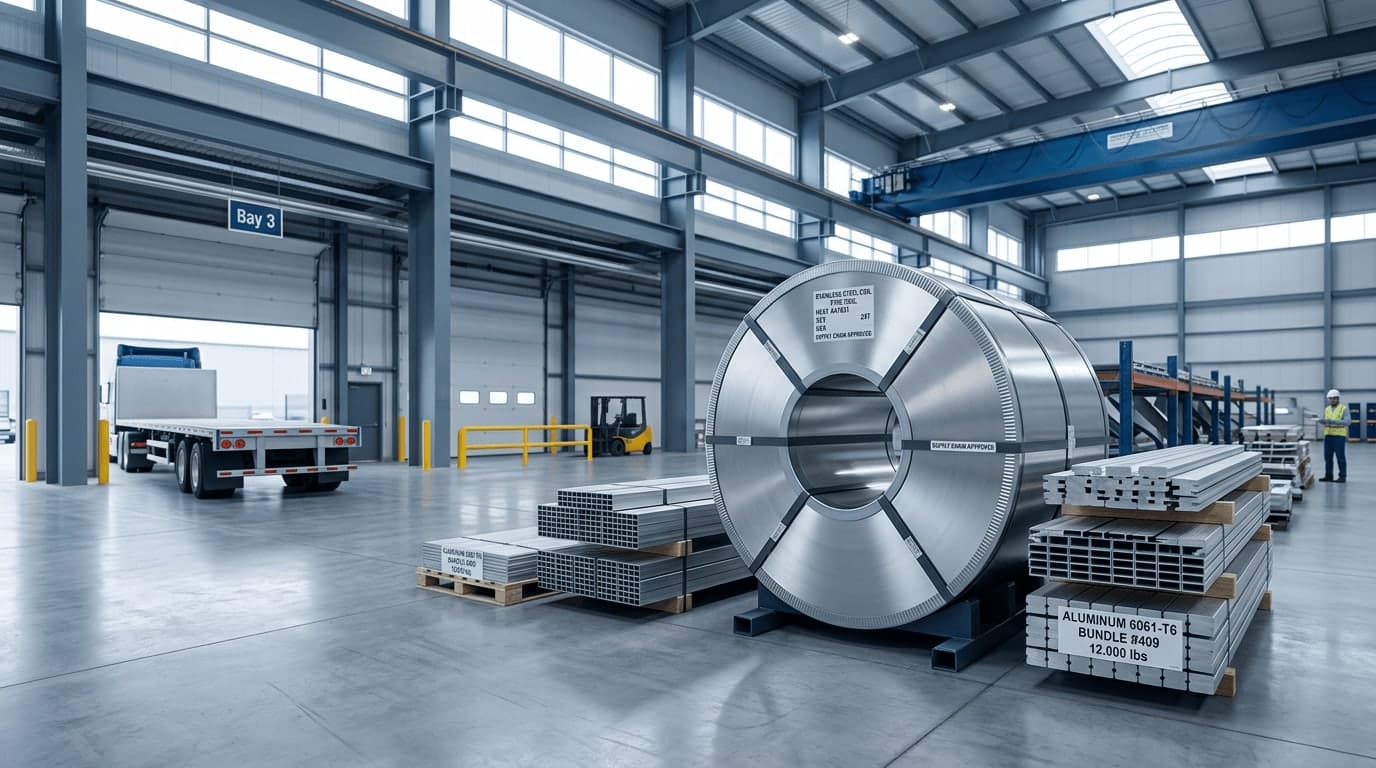
Coils, plate, billets, and extrusions require equipment and securement matched to the actual load profile. Heavy-freight risk is decided before the trailer leaves the shipper.
Steel & Aluminum Logistics
Load integrity protected.
From coils, plate, and extrusions to high-density mill freight and cross-border metal flows across Canada, the United States, and Mexico, we manage steel and aluminum logistics with engineered load planning, route discipline, and clear operational ownership from pickup through delivery.
Industry Demands
Steel and aluminum freight starts to fail when load physics, route readiness, and handoff control are treated as separate tasks. Delivery confidence depends on engineered loading, compliant routing, and accountable execution at every custody point.
Coils, plate, billets, and extrusions require equipment and securement matched to the actual load profile. Heavy-freight risk is decided before the trailer leaves the shipper.
Weight, dimension, permit, and site-access requirements need to be resolved before movement begins. Constraints discovered too late create dwell, compliance exposure, and missed receiving windows.
Metal buyers need one operating thread from origin handoff through final receipt. Ownership, milestone visibility, and corrective action need to stay clear when handling, timing, or destination conditions change.
Adjust weight and center of gravity to evaluate axle pressure distribution and stability.
35 tons
Center-of-gravity shift redistributes axle load; balanced placement improves stability under heavy weight.
Engineered load posture. Route-ready execution. Controlled delivery.
How We Support
Four controls buyers feel first: load engineering, route readiness, cross-border continuity, and owner-led exception handling when conditions shift.
Move plans are built around weight profile, commodity behavior, securement requirements, and destination handling constraints before dispatch.
Routing, dimensional considerations, and receiving constraints are reviewed before movement so compliance issues do not surface mid-lane.
Border-facing steel and aluminum freight moves with document readiness, broker coordination, and named ownership before corridor variability becomes delivery risk.
Status, variance, and corrective action are reported in a format operations, procurement, and receiving teams can act on quickly.
Execution built for load physics, route discipline, and controlled delivery.
Coil / Plate
Load profile
CA / US / MX
Metal corridors
Route-ready
Compliance posture
24 / 7
Ops coverage
The SSP Standard
The test isn't whether you can move heavy metal. It's whether load control, route discipline, and execution hold when margins narrow.
Load Engineering
Route and Compliance Control
Exception Visibility
Typical market: Equipment and securement treated as routine dispatch setup, not lane-specific engineering.
SSP: Equipment fit and securement aligned to the actual load profile before dispatch.
Typical market: Route, permit, and site constraints checked too late — friction after the load is already moving.
SSP: Route and compliance controls are embedded in pre-dispatch planning and owner-led execution governance.
Typical market: Event-only updates — limited context when receiving timing or route conditions begin to shift.
SSP: Milestone reporting includes impact context, named ownership, and corrective-action logic buyers can use before the issue expands.
Examples of load-control files, route checkpoints, and exception records can be reviewed during qualification.
Ready to review the network
If load control, route readiness, or cross-border metal freight are carrying too much risk in your network, we can review the lanes with you and identify where stronger engineering, clearer visibility, and tighter operating discipline will matter most.
We evaluate commodity form, weight profile, route constraints, receiving conditions, and corridor exposure by lane.
We define equipment posture, load controls, visibility cadence, compliance checkpoints, and escalation ownership.
Execution starts with active oversight, shipment-level control, and structured review as the program stabilizes.
Ready to review the network