
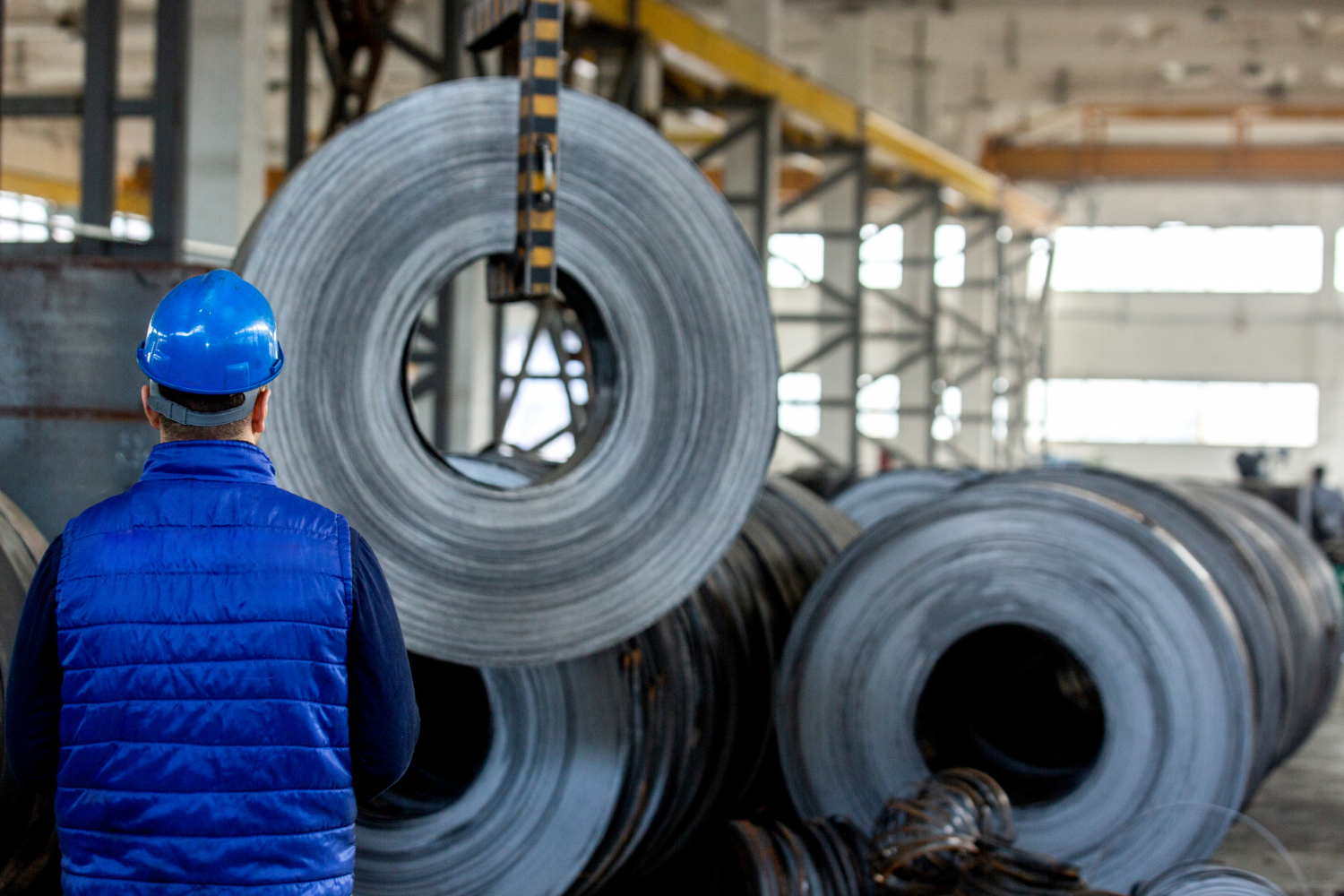
Steel coil transportation requires specialized trailers, suitable lifting equipment and cargo-securement methods designed for heavy, cylindrical loads. Unlike ordinary palletized freight, steel coils can roll, shift or tip during transit if they are not properly positioned and restrained. Their weight and dimensions also affect trailer selection, axle distribution, route planning and delivery requirements.
Businesses shipping steel coils need to consider more than the distance between pickup and delivery. The transportation method must match the coil's weight, dimensions, orientation, handling requirements and destination facilities. This guide explains how steel coil shipping works, which equipment is used, what safety requirements apply and which factors influence transportation costs across Canada and the United States.
What Is Steel Coil Transportation?
Steel coil transportation involves moving rolled steel products from mills and processing facilities to manufacturers and industrial buyers. Coils may consist of hot-rolled, cold-rolled, galvanized or coated steel.
These shipments require careful planning because of their:
- Heavy weight: Coils concentrate substantial weight in a small area.
- Rolling risk: Their cylindrical shape requires proper support and securement.
- Surface protection: Incorrect handling can damage the steel and outer wraps.
- Load distribution: Poor positioning can affect axle weight and vehicle stability.
- Specialized handling: Loading and unloading may require overhead cranes, coil grabs or suitable forklifts.
Each shipment must be planned around the coil's weight, dimensions, orientation and handling requirements.
What Are the Main Methods of Steel Coil Transportation?
Steel coils move by road, rail and ocean freight, depending on shipment volume, origin, destination and delivery requirements. Road transportation is commonly used for direct mill-to-customer deliveries and regional distribution, while rail and ocean freight can support longer-distance or higher-volume supply chains.
1. Flatbed Truck Transportation
Flatbed trailers are commonly used for steel coil shipping when the load can be accommodated within the trailer's weight, dimensions and securement requirements.
They provide open access for loading and unloading with overhead cranes and other industrial lifting equipment. However, a standard flatbed must be configured appropriately for the coil's orientation and weight.
Common applications include:
- Steel mill to processing facility deliveries
- Regional distribution to manufacturers
- Shipments between warehouses and industrial customers
- Cross-border steel freight between Canada and the United States
A flatbed may use coil racks, cradles, blocking, dunnage and rated tiedowns to support and restrain the load.Businesses moving steel products can explore flatbed transportation services for freight that requires open-deck equipment.
2. Steel Coil Trailer Transportation
A steel coil trailer is designed or equipped to carry cylindrical steel loads using dedicated support structures, often including a recessed coil well or removable coil racks.
The coil well provides a lower seating position for compatible loads and helps keep the centre of gravity lower than it would be with an unsupported load placed on a flat deck. The coil must still be properly blocked and secured.
Coil trailers are suitable when:
- The coil's weight and dimensions match the trailer's capacity.
- The loading orientation is compatible with the coil well.
- The trailer's support and anchor points are suitable for the securement plan.
- The loading and unloading facilities can handle the coil safely.
The trailer configuration should be confirmed before dispatch. Not every coil fits every coil well, and a coil trailer does not remove the need for proper tie downs and blocking.
3. Step Deck and Specialized Trailer Transportation
Step deck trailers have an upper deck and a lower deck, providing additional vertical clearance for freight that may exceed the height limits of a conventional flatbed arrangement.
They can be considered for steel coils or related metal freight when the load dimensions, support requirements and securement plan suit the equipment.
For exceptionally heavy, oversized or route-sensitive shipments, specialized heavy-haul equipment may be required. Options such as removable gooseneck (RGN) trailers should be selected based on the actual load profile, legal dimensions, axle capacity and route requirements rather than used as a default for every coil.
Learn more about step deck transportation and RGN and heavy-haul transportation for shipments requiring specialized trailer configurations.
4. Rail Transportation
Rail can be practical for large-volume steel movements over longer distances, particularly when mills, distribution centres and customers have suitable rail access.
Steel coils may move in purpose-equipped railcars with coil cradles or other support systems designed for the product and loading orientation.
Rail transportation can help businesses move larger quantities over established corridors. However, it may require additional truck transportation at the origin or destination when facilities do not have direct rail access.
5. Ocean and Intermodal Transportation
Ocean freight is used when steel coils move between international markets. Depending on the shipment, coils may be transported in suitable containers, open-top containers or flat-rack equipment.
The loading plan must account for:
- Container payload and floor-loading limitations
- Coil weight and dimensions
- Proper support and weight distribution
- Blocking, bracing and lashing
- Moisture protection and packaging requirements
- Port handling and inland delivery arrangements
For international shipments, container suitability and loading arrangements should be confirmed before the freight reaches the port.
What Equipment Is Used for Steel Coil Transportation?
The right equipment depends on the coil's weight, dimensions, orientation and handling requirements. Both the trailer and the loading equipment must be suitable for the shipment.
| Equipment | Purpose |
| Flatbed trailer | Carries coils and provides access for crane loading |
| Coil trailer with coil well | Supports compatible coils in a recessed section |
| Step deck trailer | Accommodates loads requiring additional vertical clearance |
| RGN or heavy-haul trailer | Handles qualifying oversized or specialized heavy loads |
| Coil racks and cradles | Support coils and help prevent rolling |
| Chains and rated tiedowns | Restrain cargo during transit |
| Friction mats | Help limit movement when used as part of an appropriate securement system |
| Timber or steel dunnage | Supports loads and distributes contact forces |
| Edge protectors | Reduce damage where tiedowns contact vulnerable surfaces |
Steel Coil Loading and Handling Equipment
Transportation safety also depends on how coils are lifted onto and off the trailer. Common industrial handling equipment includes:
- Overhead cranes: Lift and position heavy coils in mills, warehouses and processing facilities.
- C-hooks: Fit through the coil eye to lift compatible coils horizontally.
- Coil grabs and tongs: Grip coils using attachments designed for the product's dimensions and weight.
- Coil upenders: Rotate coils between eye-to-sky and eye-to-side positions.
- Forklifts with approved attachments: Move coils or coil cradles when the truck, attachment and load configuration are suitable.
Lifting attachments must be rated for the load and used by trained operators. The UK's Health and Safety Executive identifies C-hooks, telescopic coil lifters and coil turn-over units as specialized coil-handling equipment. It also emphasizes using suitable equipment that allows workers to operate from safe positions.
What Are the Steel Coil Transportation Safety Requirements?
Steel coil transportation safety depends on correct load placement, suitable support, rated securement equipment and compliance with the rules that apply to the route.
The main objective is to prevent the coil from rolling, shifting, tipping or falling during braking, acceleration, turning and other normal road conditions.
1. Follow Metal Coil Cargo-Securement Rules
In the United States, Federal Motor Carrier Safety Regulations under 49 CFR §393.120 establish specific requirements for metal coils weighing 5,000 lb (2,268 kg) or more, individually or grouped together.
The requirements vary according to the coil's orientation:
- Eye vertical: Securement must prevent forward, rearward and lateral tipping. The specified arrangement includes diagonal tiedowns across the coil eye, a transverse tiedown and a method to prevent forward movement.
- Eye crosswise: The coil must be supported by a cradle, chocks, wedges or another suitable method to prevent rolling. Tiedowns through the eye must restrain forward and rearward movement. An X-pattern of tiedowns through the eye is prohibited.
- Eye lengthwise: The coil must be prevented from rolling and secured using one of the specified tiedown arrangements, together with blocking or friction mats to control longitudinal movement.
The exact arrangement depends on the load configuration and applicable provision. These requirements should not be replaced with a generic number of straps or chains.
2. Use Proper Blocking and Coil Supports
Steel coils must not be allowed to roll freely on a trailer deck. Cradles, coil bunks, chocks or wedges should be suitable for the coil and secured so they cannot become loose during transit.
Under the US metal coil rules, nailed blocking or cleats alone cannot be used to secure timbers, chocks or wedges in the specified configurations.
In Ontario, cargo that can roll must also be restrained using chocks, wedges, cradles or equivalent means.
3. Check Tiedowns and Working Load Limits
Chains, tiedowns, anchor points and other securement components must be in proper working condition and suitable for the load.
Before dispatch, check:
- Working load limit markings and equipment ratings
- Chains, hooks, binders and connection points
- Damaged, stretched or worn components
- Edge protection where tiedowns contact the cargo
- Trailer anchor points and structural condition
- Correct positioning and tension of each tiedown
Ontario's cargo-securement guidance states that the combined working load limit of tiedowns must generally be at least 50% of the weight of the article or group of articles being secured. Commodity-specific rules and the complete securement arrangement must also be considered.
4. Distribute Weight Across the Trailer
Steel coils concentrate substantial weight over a small area. Their position affects axle loading, trailer stability and vehicle handling.
Before movement, the carrier should confirm:
- Total shipment weight
- Individual coil weights
- Trailer payload capacity
- Axle and gross vehicle weight limits
- Coil position and centre of gravity
- Applicable road and bridge restrictions
If a load exceeds legal weight or dimensional limits, permits and an appropriate specialized transport plan may be required.
5. Inspect the Load During Transit
Securement equipment can loosen or shift as the vehicle travels. Drivers must follow the inspection requirements applicable to the jurisdiction and shipment.
In Ontario, cargo inspections and rechecks are governed by provincial commercial vehicle and cargo-securement requirements. Drivers should follow the applicable inspection schedule and re-secure any component that requires adjustment before continuing.
6. Control Loading and Unloading Areas
Loading and unloading can expose workers to crushing, falling-load and moving-equipment hazards.
Safe procedures include:
- Establishing a controlled lifting and unloading zone.
- Keeping workers clear of suspended coils.
- Using trained crane and forklift operators.
- Confirming the trailer is positioned on suitable, stable ground.
- Checking lifting attachments before use.
- Using clear communication between operators and ground personnel.
- Keeping pedestrians away from moving vehicles and lifting operations.
The Health and Safety Executive highlights vehicle deliveries, mechanical lifting and falling stock as significant hazards in steel handling operations.
How Does SSP Group Manage Steel Coil Transportation?
SSP Group coordinates steel coil transportation across Canada, the United States and Mexico through its company-owned fleet, experienced logistics team and vetted carrier network. Its team plans each shipment around coil weight, dimensions, trailer requirements, securement and delivery conditions.
Key services include:
- Equipment planning: Matching suitable trailers and securement arrangements to the cargo.
- Route compliance: Reviewing weight limits, permits and road restrictions.
- Cross-border logistics: Coordinating shipment documentation and transportation across North American markets.
- Shipment coordination: Managing carrier communication and delivery updates from pickup to arrival.
With experience in steel and industrial freight, SSP Group supports businesses moving coils, plates, extrusions and other metal products. Visit SSP Group's Steel and Aluminum Logistics page or request a freight quote.