
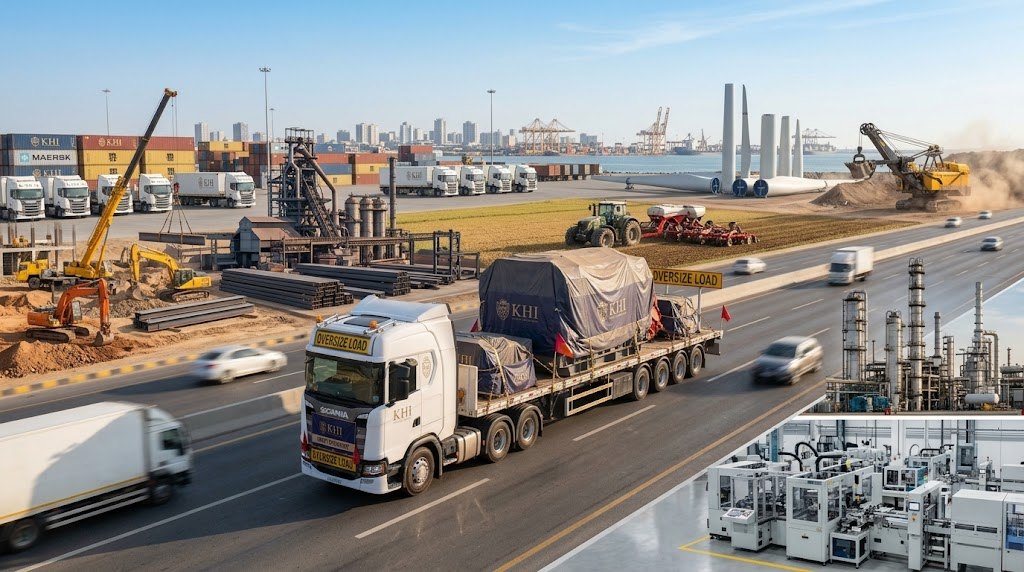
In today's fast-paced logistics environment, businesses often need to move cargo that is too large, heavy, or uniquely shaped for standard enclosed trailers. That's where flatbed shipping plays a critical role. Flatbed trailers feature an open design without sides or a roof, allowing freight to be loaded from multiple angles and transported efficiently. Flatbeds are commonly used for oversized loads, heavy machinery, steel structures, lumber, and industrial equipment that cannot fit inside traditional enclosed trailers.
From construction sites and manufacturing plants to farms and energy projects, numerous industries depend on flatbed transportation to keep operations running smoothly. Understanding which industries rely on flatbed shipping can help businesses choose the right freight solution while improving efficiency, safety, and supply chain performance.
What Is Flatbed Shipping?
Flatbed shipping is a freight transportation method that uses open-deck trailers designed to carry cargo that exceeds the dimensions or loading requirements of enclosed trailers. Because flatbeds lack walls and roofs, they provide greater flexibility for loading, unloading, and securing freight.
Advantages of Flatbed Shipping
- Accommodates oversized and irregularly shaped cargo
- Allows loading from the sides, rear, or top
- Ideal for cranes and forklift loading
- Suitable for heavy equipment and industrial machinery
- Reduces loading restrictions for large projects
- Supports long-distance and regional transportation
These advantages make flatbed freight an essential component of many industries that regularly move large-scale materials and equipment.
Why Industries Choose Flatbed Shipping
Many industries handle freight that is difficult or impossible to transport using standard trailers. Flatbed shipping provides the flexibility required for:
- Heavy machinery transportation
- Construction materials delivery
- Industrial equipment relocation
- Oversized cargo movement
- Infrastructure development projects
- Energy sector logistics
Its versatility makes flatbed transportation one of the most widely used freight solutions in commercial logistics.
Construction Industry
The construction industry is one of the largest users of flatbed shipping services. Construction projects require a constant flow of materials, equipment, and structural components to job sites.
Common Construction Freight
- Lumber
- Concrete forms
- Scaffolding
- Pipes
- Roofing materials
- Excavators and bulldozers
Why Flatbeds Are Essential
Construction materials are often oversized and heavy. Flatbed trailers allow contractors to load materials quickly and deliver them directly to job sites, reducing delays and improving productivity.
Manufacturing Industry
Manufacturers frequently rely on flatbed shipping to transport raw materials, production equipment, and finished industrial products.
Typical Manufacturing Freight
- Industrial machinery
- Fabricated steel products
- Metal coils
- Production equipment
- Large generators
- Factory components
Benefits for Manufacturers
Flatbed transportation enables manufacturers to move oversized equipment between facilities, suppliers, and customers while minimizing handling requirements and transportation challenges.
Agriculture Industry
Agricultural operations depend heavily on flatbed transportation, particularly during planting and harvesting seasons.
Common Agricultural Cargo
- Tractors
- Combines
- Harvesters
- Irrigation systems
- Grain handling equipment
- Fertilizer tanks
Seasonal Transportation Needs
Farmers often move equipment between fields, farms, and service centers. Flatbed trailers provide a practical solution for transporting large machinery safely and efficiently.
Energy and Oil & Gas Industry
The energy sector relies on flatbed freight to move massive equipment and specialized components used in production, exploration, and infrastructure development.
Freight Commonly Transported
- Drilling rigs
- Pipeline sections
- Compressors
- Storage tanks
- Industrial pumps
- Power generation equipment
Renewable Energy Components
As renewable energy projects continue to expand, flatbed transportation plays an increasingly important role in moving:
- Wind turbine blades
- Tower sections
- Solar panel mounting systems
- Utility-scale energy equipment
The size and dimensions of these components often require specialized flatbed and heavy-haul transportation solutions.
Mining Industry
Mining companies operate in remote locations and frequently transport heavy equipment that exceeds standard freight dimensions.
Mining Equipment Transported
- Loaders
- Excavators
- Crushers
- Drilling equipment
- Conveyor systems
- Processing machinery
Why Flatbeds Are Ideal
The open design of flatbed trailers allows oversized mining equipment to be loaded and secured more efficiently than enclosed alternatives.
Infrastructure and Utility Industry
Government agencies, utility providers, and infrastructure contractors rely on flatbed freight to support large-scale development projects.
Common Infrastructure Cargo
- Bridge components
- Utility poles
- Transformers
- Concrete barriers
- Water treatment equipment
- Road construction machinery
Supporting Public Projects
Flatbed transportation helps deliver critical materials needed for highways, bridges, electrical grids, telecommunications networks, and municipal infrastructure improvements.
Automotive Industry
Although finished vehicles are typically transported using specialized carriers, flatbed trailers are widely used throughout the automotive supply chain.
Common Automotive Freight
- Manufacturing equipment
- Vehicle frames
- Industrial robotics
- Large automotive components
- Production line machinery
Supply Chain Advantages
Flatbed shipping enables automotive manufacturers and suppliers to transport large components efficiently between production facilities.
Aerospace and Aviation Industry
The aerospace industry frequently requires transportation for oversized and highly specialized components.
Typical Aerospace Freight
- Aircraft fuselage sections
- Wings
- Engines
- Ground support equipment
- Manufacturing machinery
Specialized Handling Requirements
Many aerospace components exceed conventional shipping dimensions, making flatbed transportation one of the most practical freight solutions available.
Choosing the Right Flatbed Shipping Provider
Not all freight carriers have the experience or equipment necessary for specialized flatbed transportation. Businesses should evaluate several factors before selecting a provider.
Industry Experience
Choose a carrier with experience handling freight specific to your industry.
Safety Compliance
Verify compliance with transportation regulations, cargo securement requirements, and driver safety standards.
Equipment Availability
Look for providers offering various trailer types, including:
- Standard flatbeds
- Double-drop trailers
Route Planning Expertise
Oversized shipments often require permits, escorts, and specialized routing. Experienced carriers can manage these requirements effectively.
Future Trends in Flatbed Shipping
The flatbed shipping industry continues to evolve alongside advances in logistics technology and supply chain management.
Key Trends Shaping the Industry
- Route optimization software
- Enhanced cargo securement technology
- Digital freight marketplaces
- Increased sustainability initiatives
- Growth in renewable energy transportation
As infrastructure projects expand and industries continue investing in large-scale equipment, demand for flatbed shipping services is expected to remain strong.
Frequently Asked Questions
What industries use flatbed shipping the most?
Construction, manufacturing, agriculture, energy, mining, infrastructure, automotive, and aerospace industries are among the largest users of flatbed transportation.
Why is flatbed shipping preferred for oversized loads?
Flatbed trailers provide open access from all sides, making them ideal for transporting cargo that exceeds standard trailer dimensions.
Can flatbed trailers transport heavy machinery?
Yes. Flatbed trailers are commonly used to transport construction equipment, agricultural machinery, industrial equipment, and mining vehicles.
What are the benefits of flatbed freight transportation?
Benefits include flexible loading options, support for oversized freight, efficient transportation of heavy equipment, and compatibility with cranes and forklifts.
Is flatbed shipping suitable for renewable energy projects?
Absolutely. Wind turbine components, solar infrastructure equipment, and utility-scale energy systems are frequently transported using flatbed trailers.
Conclusion
Flatbed shipping serves as a critical transportation solution for industries that depend on oversized, heavy, and specialized freight. Construction companies use flatbeds to move building materials and equipment, manufacturers rely on them for machinery and industrial products, and sectors such as agriculture, energy, mining, infrastructure, automotive, and aerospace depend on their versatility to keep operations running efficiently.
As supply chains become increasingly complex and demand for large-scale transportation grows, flatbed shipping will continue to play a vital role in supporting industrial development, infrastructure expansion, and economic growth. Businesses that partner with experienced flatbed carriers can improve logistics performance, reduce delays, and ensure their cargo reaches its destination safely and efficiently.