
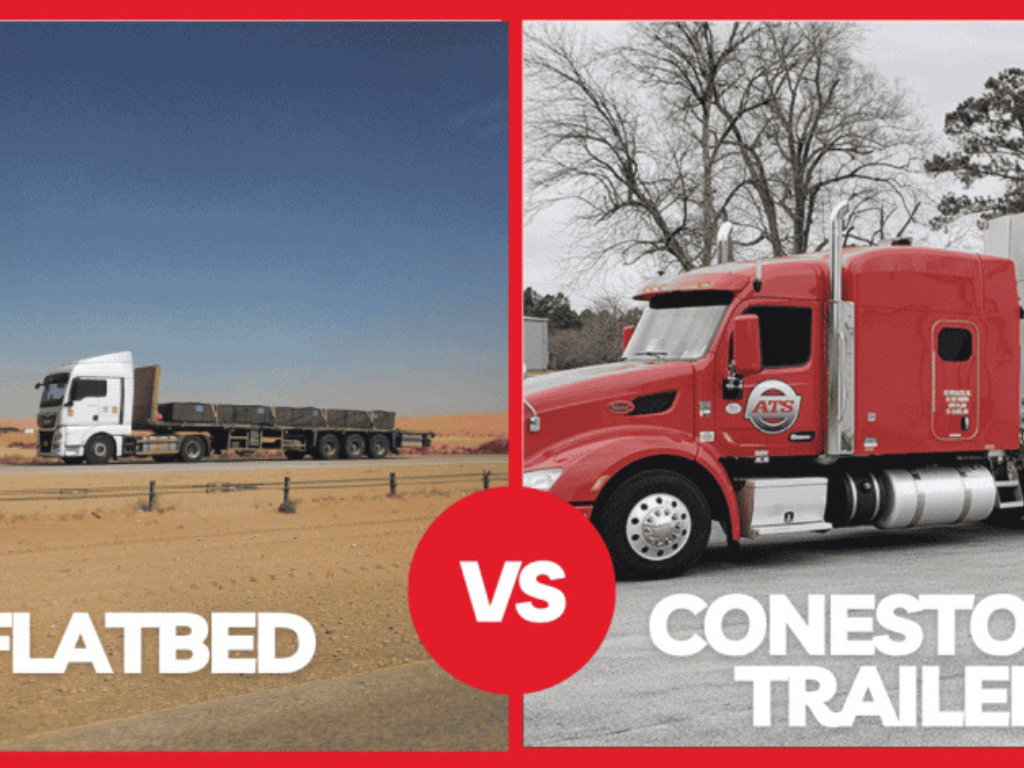
Compare Conestoga trailers and flatbed trailers to understand cargo protection, loading flexibility, cost, safety, availability, and which option is best for your freight.
When it comes to shipping large freight, choosing the right trailer makes a big difference. Two popular options in the industry are Conestoga trailers and flatbed trailers. Each has its own pros and cons depending on the type of cargo you’re moving.
In this guide, we’ll break down the differences between Conestoga trailers and flatbeds, explain the benefits of each, and help you decide which one is best for your shipping needs.
What Is a Flatbed Trailer?
A flatbed trailer is a long, flat platform with no sides or roof. It is one of the most commonly used trailers in the freight industry and a go-to option for oversized, heavy, or irregularly shaped cargo.
Key Features
- Open deck for easy loading and unloading
- Suitable for oversized or irregularly shaped freight
- Available in different lengths, commonly 48 or 53 feet
- Allows loading from the side, rear, or overhead with cranes and forklifts
Flatbeds are often used for cargo such as steel coils, lumber, large equipment, building materials, and machinery.
What Is a Conestoga Trailer?
A Conestoga trailer is essentially a flatbed with a rolling tarp system. It looks like a curtain that can slide back and forth, giving you both protection and the loading flexibility of a flatbed.
Because the tarp system retracts, freight can still be accessed from the side, rear, or overhead without manual tarping.
Key Features
- Rolling tarp system helps protect freight from weather
- Works like a flatbed for loading and unloading
- Ideal for freight that needs cover but does not fit in a dry van
- Reduces the need for manual tarping
Think of it as a hybrid trailer that offers the best of both worlds: open-deck access with enclosed protection.
Conestoga Trailer vs Flatbed: What’s the Difference?
While both trailers are used for heavy freight, there are a few key differences between a Conestoga trailer and a flatbed trailer.
Main Differences
- Protection: A flatbed leaves cargo exposed to weather unless tarped. A Conestoga provides built-in rolling tarp coverage.
- Loading style: Both allow side and crane loading, but a Conestoga can take slightly more time because of the tarp system.
- Cost: Conestoga trailers usually cost more because of the added protection and specialized equipment.
- Availability: Flatbeds are more widely available, while Conestoga trailers may require more advance planning.
- Cargo fit: Flatbeds work well for rugged or weather-tolerant freight, while Conestogas are better for sensitive or high-value cargo.
Conestoga Trailer Benefits
Choosing a Conestoga trailer comes with several advantages, especially for sensitive or high-value cargo.
Advantages of Using a Conestoga
- Protects freight from rain, snow, wind, and road debris
- Reduces the risk of damage during transport
- Works well for items that cannot get wet, such as machinery or electronics
- Helps maintain cleaner deliveries
- Reduces or eliminates manual tarping
- Improves safety by limiting time spent tarping at height
If your cargo cannot afford exposure to the elements, a Conestoga trailer is usually the better choice.
Flatbed Trailer Benefits
Even though it’s open, a flatbed trailer still holds its own. It has been a go-to solution for many freight jobs for decades.
Benefits of Using a Flatbed
- Easy to load from any side with cranes or forklifts
- Ideal for oddly shaped or oversized items
- Lower cost than Conestoga trailers
- Widely available and easier to book
- Strong option for construction materials, steel, lumber, and industrial freight
Flatbeds are perfect for tough jobs where exposure to weather is manageable or where tarping can provide enough protection.
When to Use a Conestoga Trailer
Certain types of freight are better suited for a Conestoga trailer.
Ideal For
- Finished products such as vehicles or equipment
- Freight with delicate surfaces or paint finishes
- Items that need to stay dry throughout transit
- High-value cargo that should not be exposed
- Machinery, electronics, and sensitive industrial components
If you’re shipping something fragile, expensive, or weather-sensitive, a Conestoga trailer may be the smarter choice.
When to Use a Flatbed Trailer
Flatbeds are strong, flexible, and often the first pick for heavy-duty shipping.
Ideal For
- Construction materials
- Steel pipes, coils, or beams
- Oversized machinery
- Lumber and building products
- Freight that is too large for a dry van
- Cargo that can be safely exposed or tarped
Flatbeds are especially useful when quick loading and unloading are priorities.
For very heavy or complex freight, RGN and heavy haul transportation may also be required depending on the cargo dimensions and loading needs.
Conestoga vs Flatbed Trailer: Pros and Cons
Here’s a quick side-by-side look to help compare the two trailer types.
| Trailer Type | Pros | Cons |
|---|---|---|
| Conestoga Trailer | Weather protection, cleaner delivery, safer for valuable cargo, reduced manual tarping | More expensive, heavier trailer weight, less availability |
| Flatbed Trailer | Cost-effective, easy to load, widely available, flexible for oversized freight | No built-in weather protection, may require tarping, higher exposure risk |
Freight Types That Decide the Trailer
Sometimes, your freight itself makes the decision easy.
- If it’s waterproof and rugged: use a flatbed trailer.
- If it’s sensitive or fragile: use a Conestoga trailer.
- If the shape is unusual but it needs to stay clean: Conestoga is usually the better fit.
- If you’re hauling building supplies: flatbed usually wins.
- If you need open-deck loading with weather protection: Conestoga is often ideal.
Knowing your cargo helps you pick the right trailer solution.
Safety Considerations
Safety is always a top concern in freight.
Flatbeds may require manual tarping, which can be risky for drivers. The loads also need to be secured tightly to prevent shifting during transport.
Conestogas remove much of the need for manual tarping and reduce exposure during loading and unloading. This can make the process safer for both cargo and drivers while keeping freight cleaner and better protected.
Which One Is Right for You?
Choosing between a Conestoga and a flatbed trailer comes down to your cargo type, budget, availability, and protection needs.
If your shipment can handle exposure and you want a cost-effective, widely available option, a flatbed is usually the best fit.
If your cargo needs cover, cleaner delivery, or an added layer of protection, a Conestoga trailer may be the better choice.
Final Thoughts
There’s no one-size-fits-all answer when it comes to freight trailers. But understanding the benefits of flatbed trailers versus Conestoga trailers helps you make smarter shipping decisions.
Next time you’re planning a shipment, think about what your cargo really needs. The right trailer can reduce risk, protect your freight, and make the entire shipping process smoother.
SSP Group supports businesses with flexible flatbed transportation, oversized freight planning, and specialized logistics solutions across North America. Contact our team to choose the right equipment for your next shipment.
FAQs
What is the main difference between a Conestoga trailer and a flatbed trailer?
A flatbed is an open-deck trailer with no built-in cover, while a Conestoga trailer has a rolling tarp system that protects freight from weather while still allowing flexible loading.
Is a Conestoga trailer more expensive than a flatbed?
Yes, Conestoga trailers usually cost more because they provide added protection and use specialized rolling tarp equipment.
When should I use a flatbed trailer?
Use a flatbed trailer for oversized, heavy, rugged, or irregularly shaped freight that can handle exposure or standard tarping.
When should I use a Conestoga trailer?
Use a Conestoga trailer for sensitive, high-value, finished, or weather-sensitive cargo that needs protection but still requires open-deck loading access.
Can a Conestoga trailer carry oversized freight?
Yes, Conestoga trailers can carry many types of oversized or irregular freight, but exact fit depends on dimensions, weight, and tarp system clearance.